Current location:Home > Our Products > 1-Deoxynojirimycin
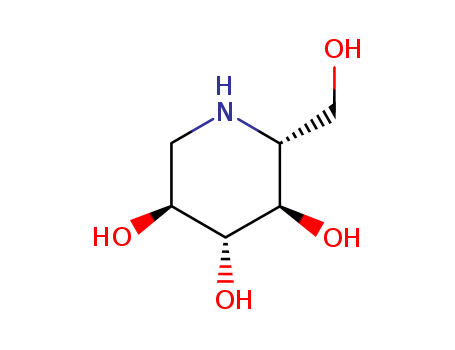
1-Deoxynojirimycin
- Name 1-Deoxynojirimycin
- CAS 19130-96-2
- Purity 99%
Product Details
Perfect Factory Offer Excellent quality 1-Deoxynojirimycin 19130-96-2 with Safe Shipping
- Molecular Formula: C6H13NO4
- Molecular Weight: 163.174
- Appearance/Colour: white crystalline solid
- Vapor Pressure: 0Pa at 25℃
- Melting Point: 195-196 °C
- Refractive Index: 1.582
- Boiling Point: 361.1 °C at 760 mmHg
- PKA: 13.77±0.70(Predicted)
- Flash Point: 197.3 °C
- PSA: 92.95000
- Density: 1.456 g/cm3
- LogP: -2.63800
1-Deoxynojirimycin(Cas 19130-96-2) Usage
|
Chemical Name |
(2R,3R,4R,5S)-2-Hydroxymethyl-piperidine-3,4,5-triol |
|
Alkaloids |
1-deoxynojirimycin? is referred DNJ for short? , it is an alkaloid extracted from the bark of mulberry leaves and roots, but it also exists in other plants and microorganisms. This product is an effective α-glucosidase inhibitor, it has significant hypoglycemic effect. After 1-deoxynojirimycin goes into the human body, it can inhibit sucrose, maltase, α-glucosidase enzyme, α-amylase decomposing? starch, sugar in the human body , thereby it can block the body's absorption of sugar, inhibiting blood sugar rising to achieve the effect of prevention and treatment of diabetes, the use of it does not cause changes in diet . In addition, DNJ can inhibit glucose modification process of HIV tunica glycoprotein , at the same time, the accumulation of immature glycoproteins may inhibit cell fusion, viral and host cell receptor can combine,which causes? syncytia formation to inhibit the replication of? MoLV ,then the virus activity is inhibited. Nojirimycin is first discovered from Streptomyces, and natural DNJ is first isolated from the bark of mulberry root. In plants, from mulberry, dayflower, hyacinth and Adenophora plants, DNJ has been isolated and identified ,? DNJ has the highest content in the mulberry and because of mulberry varieties, medicinal parts, seasonal climate, geography, soil, leaf position, different developmental stages? and other factors , there is a big difference. In a microorganism, from a variety of Streptomyces and Bacillus,DNJ is isolated ,it is also found that two kinds of endophytes separated from Mulberry including Stenotrophomonas oligotrophic Pseudomonas and Micrococcus can produce DNJ,fermentation conditions of a variety of? microbial production of DNJ are studied. In insects, in addition to silkworm rich in DNJ , single or oligophagous insects with eating mulberry leaves habit including wild silkworm, mulberry geometrid, Diaphania pyloalis Walker , mulberry white capterpillar are also rich in DNJ , DNJ in insects bodies are from the food , content of DNJ in Bombyx bodies is different due to the different varieties of silkworm, developmental stages, tissues and organs as well as feed and other factors, with the silkworm age of progress ,there is the existence of cyclical changes in absorption and accumulation and excretion of DNJ. Now DNJ biosynthetic pathways in Streptomyces, Bacillus and Commelina bodies are explored and it is found that? synthesis of DNJ has different mechanisms in different species . In addition, three main synthesis methods of 1-deoxynojirimycin are proven , some of the synthetic derivatives of DNJ have been used clinically. Recent studies show that the active ingredient of mulberry DNJ (l-deoxynojirimycin), only exists in mulberry leaves , by blocking the α-glucosidase enzymes to hinder sugar? becoming to glucose, mulberry leaf extract can inhibit intestinal glucose absorption. This can suppress the blood sugar level and blood pressure rising , and it can have good inhibitory effect on variability of imidazopyridine, benzopyrene and other carcinogenic substances,it has anti-cancer effect, at the same time ,mulberry leaf extract can reduce cholesterol, and improve liver function and eliminate constipation and so on. |
|
Definition |
ChEBI: An optically active form of 2-(hydroxymethyl)piperidine-3,4,5-triol having 2R,3R,4R,5S-configuration. |
|
Biological Activity |
Inhibitor of glucosidase I (K i = 2.1 mM) and II (K i = 7 mM). |
InChI:InChI=1/C6H13NO4/c8-2-3-5(10)6(11)4(9)1-7-3/h3-11H,1-2H2/t3?,4?,5-,6-/m1/s1
19130-96-2 Relevant articles
1,3-Oxazine as a chiral building block used in the total synthesis of (+)-1-deoxynojirimycin and (2R,5R)-dihydroxymethyl-(3R,4R)-dihydroxypyrrolidine
Park, Seok-Hwi,Kim, Ji-Yeon,Kim, Jin-Seok,Jung, Changyoung,Song, Dong-Keun,Ham, Won-Hun
, p. 657 - 661 (2015)
Concise and stereocontrolled syntheses o...
A short and practical synthesis of 1-deoxynojirimycin
Behling,Farid,Medich,Scaros,Prunier,Weier,Khanna
, p. 1383 - 1386 (1991)
The potent glucosidase inhibitor 1-deoxy...
A fluorescence study of isofagomine protonation in β-glucosidase
Lindb?ck, Emil,Laursen, Bo Wegge,Poulsen, Jens Christian Navarro,Kils?, Kristine,Pedersen, Christian Marcus,Bols, Mikael
, p. 6562 - 6566 (2015)
N-(10-Chloro-9-anthracenemethyl)isofagom...
Isotope edited NMR studies of glycosidases: Design and synthesis of a novel glycosidase inhibitor
Hines, Jennifer V.,Chang, Heesun,Gerdeman, Melinda S.,Warn, Dana E.
, p. 1255 - 1260 (1999)
N-13C-methyl-deoxynojirimycin was synthe...
Design, synthesis, and activity evaluation of novel N-benzyl deoxynojirimycin derivatives for use as α-glucosidase inhibitors
Zeng, Fanxin,Yin, Zhongping,Chen, Jiguang,Nie, Xuliang,Lin, Ping,Lu, Tao,Wang, Meng,Peng, Dayong
, (2019/09/19)
To obtain α-glucosidase inhibitors with ...
Asymmetric total syntheses of (+)-2,5-dideoxy-2,5-imino-D-glucitol [(+)-DGDP] and (?)-1-deoxymannojirimycin [(?)-DMJ] via an extended chiral 1,3-oxazine
Myeong, In-Soo,Jung, Changyoung,Kim, Ji-Yeon,Park, Seok-Hwi,Ham, Won-Hun
, p. 2422 - 2425 (2018/05/25)
The asymmetric total syntheses of (+)-2,...
Synthesis of 1-deoxynojirimycin: Exploration of optimised conditions for reductive amidation and separation of epimers
Iftikhar, Mehwish,Wang, Lin,Fang, Zhijie
, p. 460 - 464 (2017/08/18)
1-Deoxynojirimycin (DNJ), which has impo...
A Fluorescence Polarization Activity-Based Protein Profiling Assay in the Discovery of Potent, Selective Inhibitors for Human Nonlysosomal Glucosylceramidase
Lahav, Dani?l,Liu, Bing,Van Den Berg, Richard J.B.H.N.,Van Den Nieuwendijk, Adrianus M. C. H.,Wennekes, Tom,Ghisaidoobe, Amar T.,Breen, Imogen,Ferraz, Maria J.,Kuo, Chi-Lin,Wu, Liang,Geurink, Paul P.,Ovaa, Huib,Van Der Marel, Gijsbert A.,Van Der Stelt, Mario,Boot, Rolf G.,Davies, Gideon J.,Aerts, Johannes M. F. G.,Overkleeft, Herman S.
supporting information, p. 14192 - 14197 (2017/10/17)
Human nonlysosomal glucosylceramidase (G...
19130-96-2 Process route
-
-
69567-11-9,76738-52-8,126836-30-4
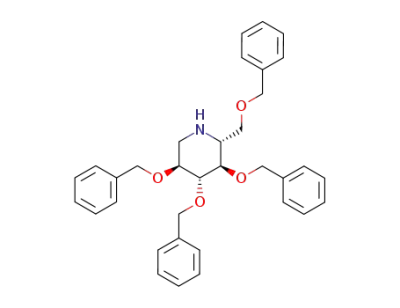
2,3,4,6-tetra-O-benzyl-1,5-dideoxy-1,5-imino-D-glucitol

-
-
19130-96-2
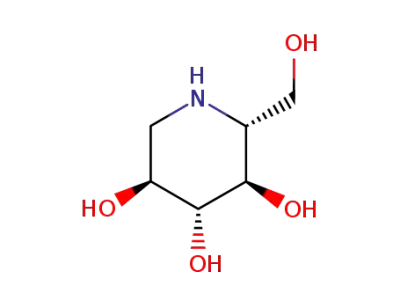
1,5-dideoxy-1,5-imino-D-glucitol
| Conditions | Yield |
|---|---|
|
With
hydrogenchloride; 20% palladium hydroxide-activated charcoal; hydrogen;
In
methanol; water;
for 14h;
|
100%
|
|
With
hydrogenchloride; palladium 10% on activated carbon; hydrogen;
In
ethanol; water;
at 20 ℃;
for 20h;
under 3000.3 Torr;
pH=Ca. 2;
|
93%
|
|
2,3,4,6-tetra-O-benzyl-1,5-dideoxy-1,5-imino-D-glucitol;
With
hydrogenchloride;
In
ethanol;
for 0.25h;
pH=Ca. 2;
Inert atmosphere;
With
palladium 10% on activated carbon; hydrogen;
In
ethanol;
for 20h;
under 3000.3 Torr;
Inert atmosphere;
|
93%
|
|
With
palladium 10% on activated carbon; hydrogen;
In
ethanol; water;
for 20h;
under 3000.3 Torr;
pH=2;
|
93%
|
|
With
ammonia; lithium;
In
tetrahydrofuran;
at -78 ℃;
for 2.5h;
|
89%
|
|
With
hydrogen; acetic acid;
palladium on activated charcoal;
for 15h;
under 6000.5 Torr;
Ambient temperature;
|
86%
|
|
With
hydrogenchloride; palladium 10% on activated carbon; hydrogen;
In
ethanol; water;
at 20 ℃;
|
85%
|
|
With
hydrogenchloride; palladium on carbon; hydrogen;
In
ethanol; water;
for 24h;
under 3000.3 Torr;
pH=2;
|
82%
|
|
With
hydrogenchloride; palladium on activated charcoal; hydrogen;
In
water;
|
|
|
With
hydrogenchloride; palladium on activated charcoal; hydrogen;
In
ethanol; water;
at 20 ℃;
under 3750.38 Torr;
|
-
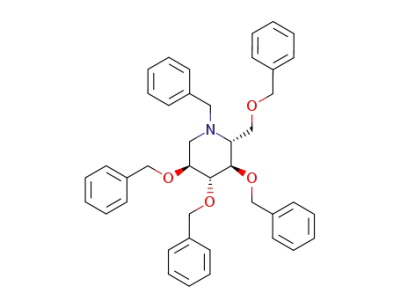
-
149302-60-3,151963-95-0
N-benzyl-2,3,4,6-tetra-O-benzyl-1-deoxynojirimycin
-
-
19130-96-2
1,5-dideoxy-1,5-imino-D-glucitol
| Conditions | Yield |
|---|---|
|
With
10 wt% Pd(OH)2 on carbon; hydrogen;
In
ethanol; chloroform;
at 20 ℃;
for 20h;
|
91%
|
19130-96-2 Upstream products
-
15218-38-9
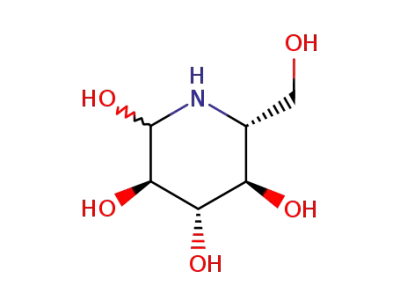
nojirimycin
-
57-04-5
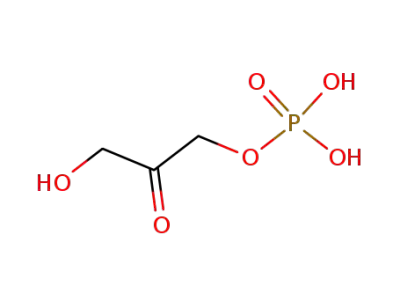
dihydroxyacetone phosphate
-
114395-07-2
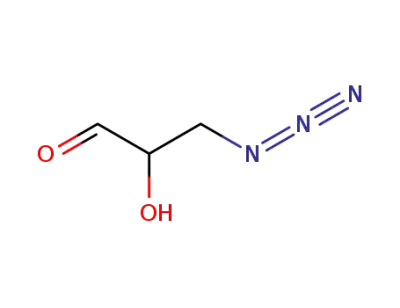
(RS)-3-azido-2-hydroxypropanal
-
96-26-4
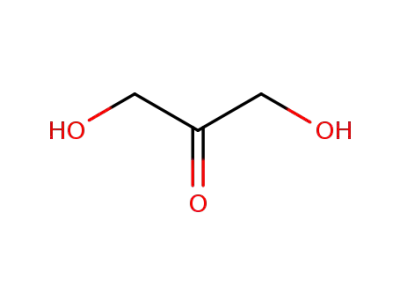
dihydroxyacetone
19130-96-2 Downstream products
-
69567-10-8
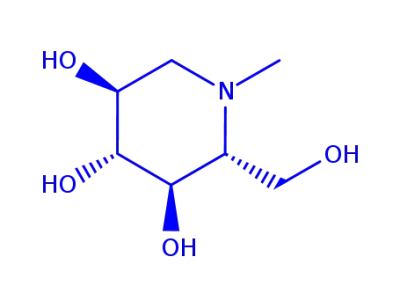
N-methyldeoxynojirimycin
-
125835-59-8
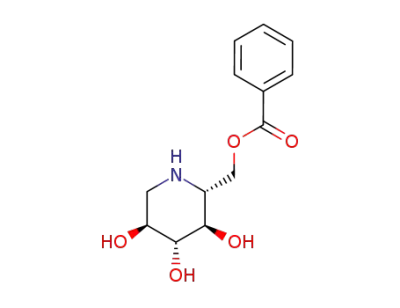
Benzoic acid (2R,3R,4R,5S)-3,4,5-trihydroxy-piperidin-2-ylmethyl ester
-
130446-88-7
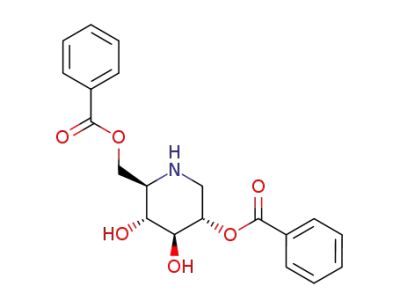
C20 H21 NO6
-
72458-46-9
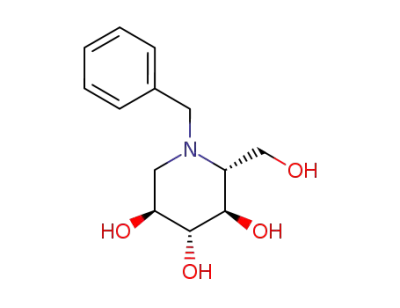
N-benzyl-1-deoxynojirimycin
Related products
-
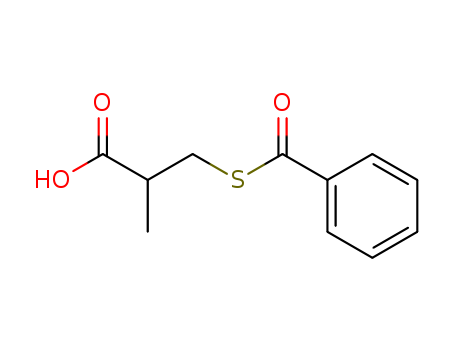 3-(Benzoylthio)-2-methylpropionic acid
CAS:74431-50-8
-
-
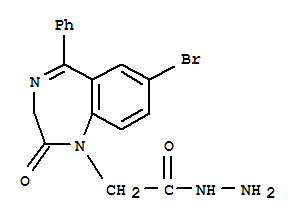 gidazepam
CAS:129186-29-4
-